Plan
Maceió Safety: Sea, Sun, Jangadas and City Precautions
Practical advice for enjoying Maceió with peace of mind, from swimming in the sea to emergency numbers.
Updated on October 5, 2026 ✓ Information checked on October 5, 2026 adapted from the Portuguese original
Maceió is a tourist city with the infrastructure to welcome visitors. Most of the precautions you need relate to the sea and the sun more than to the city itself. Below are the main guidelines, the emergency numbers and what official sources say about ground subsidence in some neighborhoods.
Safety in the sea
Currents and sea conditions
Even beaches that look calm can have currents. To go into the water safely:
- choose stretches with lifeguards and follow their instructions;
- check the beach signs before going in;
- don’t swim alone, far from shore or after drinking alcohol;
- if a current pulls you, don’t swim against it. Swim parallel to the beach until you’re out of the current and only then head back;
- with children, keep a constant eye on them, even in shallow water.
Reefs and natural pools
The Pajuçara natural pools and other reefs are exposed at low tide. Check the times in the Maceió tide table. On the reefs:
- don’t step on the coral: it’s alive and can cut;
- wear water shoes if you’re going to walk on the rocks;
- don’t feed the fish;
- return to the boat when the tide starts to rise.
Jangadas and boats: always a life jacket
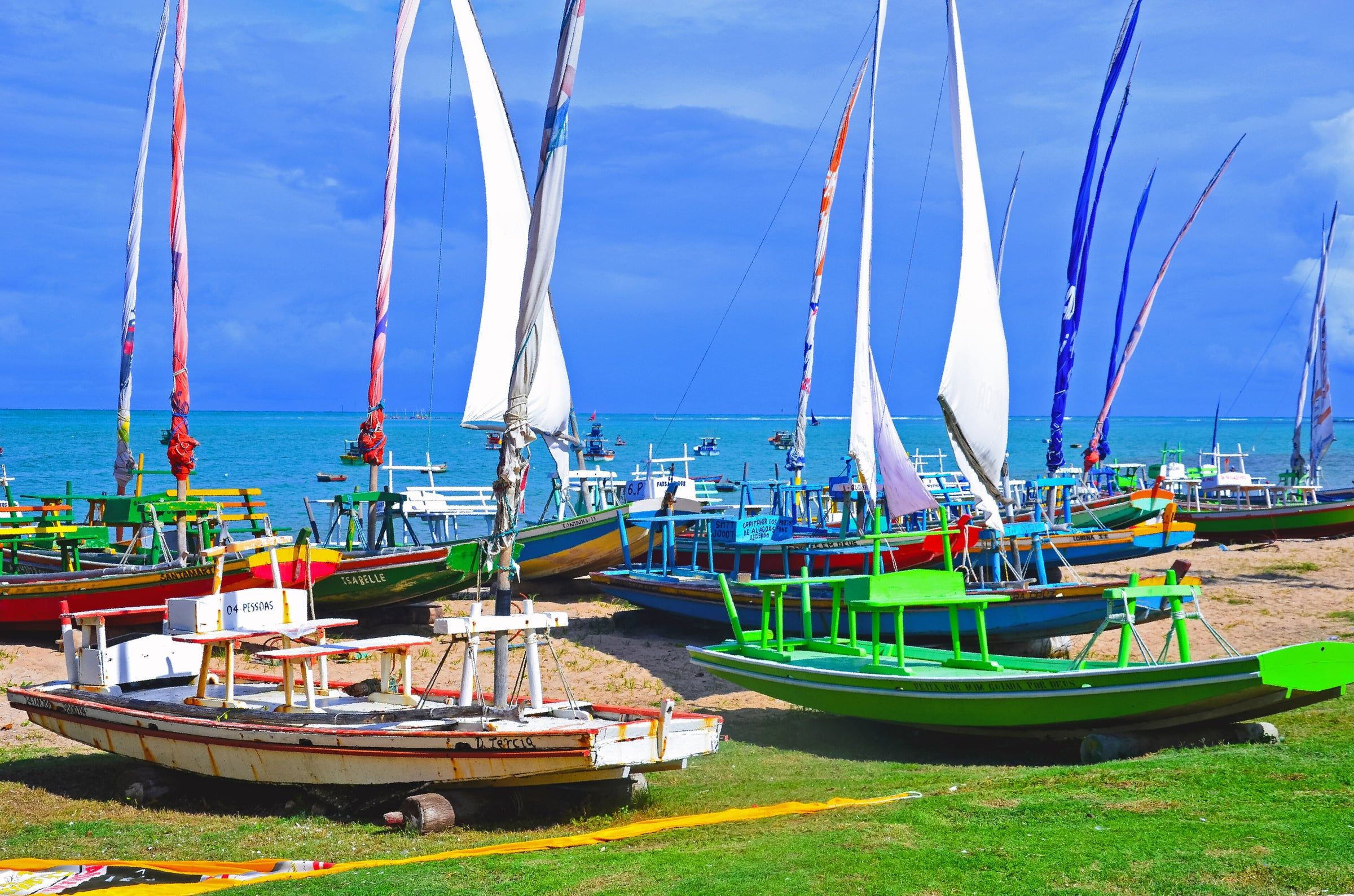
The rules of the Alagoas Harbor Master’s Office (Brazilian Navy) require passengers on jangadas and transport canoes to wear a life jacket, regardless of the route. The same rules limit jangada navigation to the coastal reef barrier. In 2025, Maceió City Hall also set rules for jangadas staying on the sand at Pajuçara.
Sun and heat
The sun in Maceió is strong all year round. Sunburn and dehydration are among the most common problems for visitors.
- Use sunscreen and reapply after each swim in the sea.
- Protect your head and eyes.
- Drink water often, especially on long outings.
- Avoid prolonged exposure between late morning and mid-afternoon.
City precautions
The tourist areas of the waterfront are usually busy during the day and early evening. The precautions are the same as in any large Brazilian city:
- don’t leave bags, phones and cameras unattended on the sand while you’re in the sea;
- avoid showing off jewelry and valuables;
- at night, stick to well-lit, busy stretches;
- use a taxi or ride-hailing app to get back late or to cross empty areas;
- check the license plate and model before getting into a ride-hailing car;
- in a car, don’t leave anything visible.
To choose an area with good facilities, see where to stay in Maceió.
Emergency numbers
| Service | Number |
|---|---|
| Military Police | 190 |
| SAMU (emergency medical care) | 192 |
| Fire Department (including water rescue) | 193 |
Calls to these numbers are free and can be made from any phone.
Ground subsidence in Maceió neighborhoods
Since 2018, some Maceió neighborhoods have recorded cracks in buildings and streets and sinking ground. In 2019, the Geological Survey of Brazil published studies on ground instability in the Pinheiro, Mutange and Bebedouro neighborhoods. The report concluded that rock salt extraction changed the stress state of the subsoil, destabilizing mining cavities and causing subsidence. The cavities lie on the shores of Mundaú Lagoon. The mining was carried out by Braskem.
The damage zoning maps, drawn up by the National Civil Defense and Maceió Civil Defense, cover the Pinheiro, Mutange, Bebedouro and Bom Parto neighborhoods. In November 2023, Maceió City Hall announced an update to the risk map and the inclusion of Bom Parto in the relocation of residents. Part of the Farol neighborhood was also affected.
What this means for visitors
- The affected areas are in the region near Mundaú Lagoon, inland in the city.
- They do not include the tourist ocean waterfront (Pajuçara, Ponta Verde, Jatiúca and Cruz das Almas), nor the historic Jaraguá district.
- Vacated areas have restricted access. Respect the signs and Civil Defense instructions.
- Routes that used to pass through these neighborhoods may have changed. Use an up-to-date maps app.
Before you travel
Also read the Maceió travel tips and the frequently asked questions. If you’re just starting to plan, go back to the step-by-step trip planner.
Frequently asked questions
Is Maceió safe for tourists?
The tourist areas along the waterfront are busy and policed, but, as in any state capital, it pays to take basic precautions: don't show off valuables, avoid empty streets at night and use a taxi or ride-hailing app for longer trips.
Does the ground subsidence affect Maceió's waterfront?
The affected neighborhoods are Pinheiro, Mutange, Bebedouro, Bom Parto and part of Farol, in the area near Mundaú Lagoon. The city's ocean beaches, such as Pajuçara, Ponta Verde and Jatiúca, are not among the areas shown on the official maps.
What are the emergency numbers?
190 for the Military Police, 192 for SAMU (ambulance) and 193 for the Fire Department, including for drowning.
Is a life jacket mandatory on a jangada?
Yes. The rules of the Alagoas Harbor Master's Office require life jackets for passengers on jangadas and transport canoes, regardless of the route.
Keep reading
Keep planning
-
 Maceió Travel Tips: What to Know Before You Go Practical advice for enjoying Maceió without wasting time or money, from low tide to sunscreen. Read guide
 -
 Maceió Tide Table: How to Read It and Plan the Natural Pools The tide table for the port of Maceió, published by the Navy, decides the day for the natural pools. Learn how to read it and use it in your itinerary. Read guide
 -
 Maceió Frequently Asked Questions Straight answers to the most common questions from first-time visitors to Maceió. Read guide