- Type
- Natural pools
- Area
- Maceió city waterfront
- Free access
- No
- Depends on the tide
- Yes
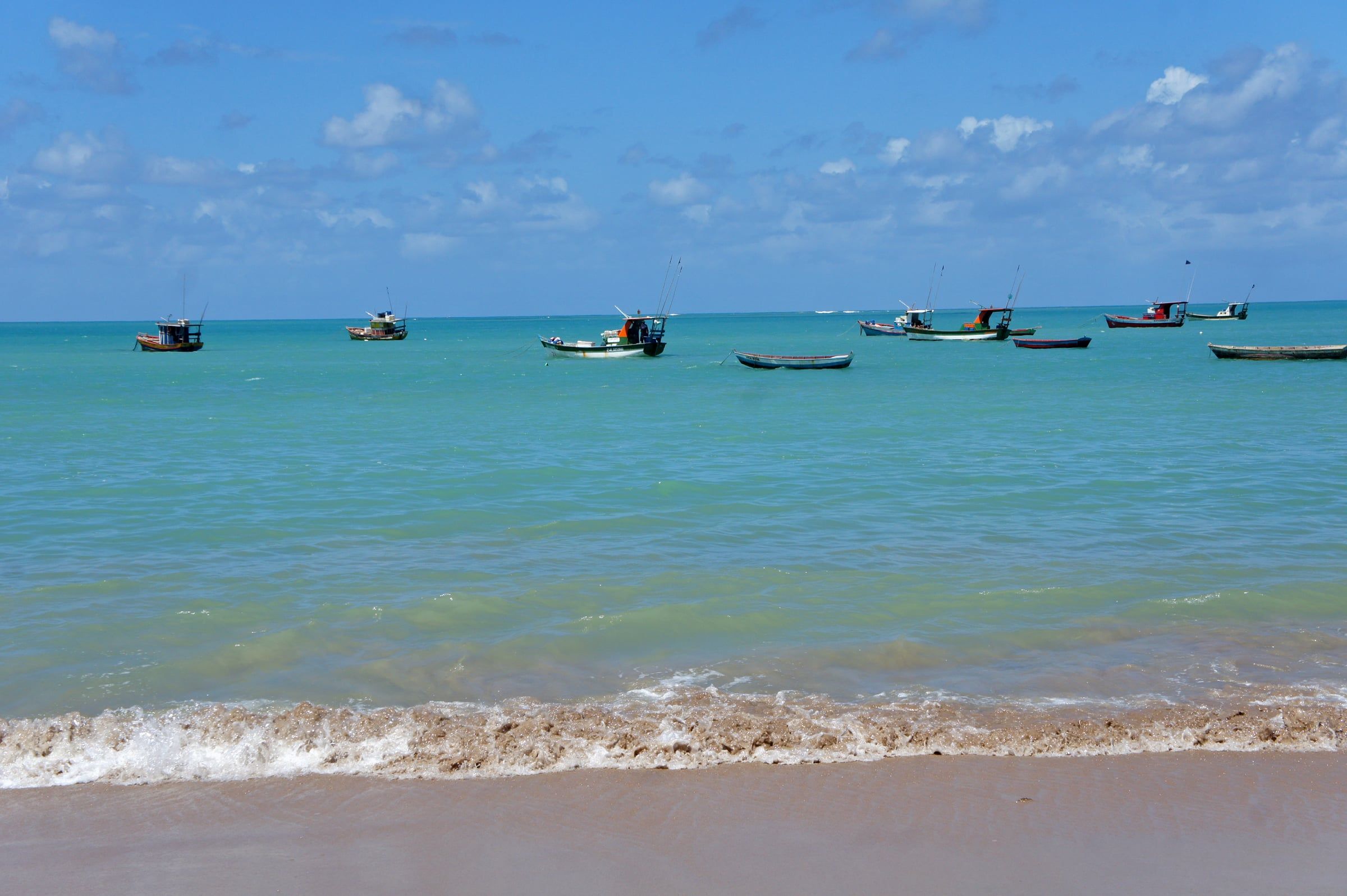
The Pajuçara natural pools are areas of shallow, clear water that form over the reefs off Pajuçara beach at low tide. It’s the outing most associated with Maceió and also the one that depends most on planning: no low tide, no pools. You get there by jangada, the traditional sailing raft of Alagoas fishermen, which leaves straight from the sand.
How the trip works
The jangada operators wait on Pajuçara beach itself, with their jangadas drawn up on the sand. In March 2025, Maceió City Hall published Ordinance No. 013/2025, which organizes how jangadas stay on the waterfront. Under the rule, tourist boats stay on a marked stretch of Pajuçara, starting from the area of the Fire Department’s Water Rescue Battalion. Fishing jangadas stay in another area, at Ponta Verde.
The ordinance also requires minimum spacing between jangadas, sails positioned so as not to block the sea view, and the operators to keep the space clean. Non-compliance can lead to a warning, a fine and seizure of the boat.
In practice, you choose a jangada, agree on the terms and board. The crossing is short and the jangada anchors near the pools. You get into the shallow water, swim, watch the fish and return on the same boat.
The tide decides everything
The pools only form at low tide. The lower the tide, the more exposed the reefs and the shallower and calmer the water. On days when the tide doesn’t drop much, the water is deeper and the trip loses its appeal.
The official reference is the tide table for the port of Maceió, published by the Navy Hydrography Center. It gives the times of high and low tide each day, with the predicted height in meters. Read the step-by-step in our Maceió tide table guide.
Tips for choosing the day:
- Choose days when low tide falls between mid-morning and mid-afternoon.
- Compare the heights over the week: the lowest tides tend to occur around the full moon and new moon.
- Arrive at the beach well before low tide. The operators usually leave before the lowest point to make the most of the falling tide.
- If your trip is short, book this outing first and fit the rest of your itinerary around it.
Safety in the sea
- Don’t step on the coral. Reefs are living structures and break under a person’s weight. Stay on the sand.
- Don’t feed the fish. Tourist food changes the animals’ behavior and health.
- Don’t take anything from the reef, neither shells nor pieces of coral.
- Sunscreen: apply it before you go and reapply. There’s no shade at the pools.
- Children: a correctly sized life jacket and an adult always beside them, even where the water looks shallow.
Water quality
The Alagoas Environment Institute (IMA-AL) publishes bathing water quality reports with sampling points along the coast. In 2026 bulletins, stretches of Maceió’s city beaches, including Pajuçara, were listed as unsuitable for swimming. The sampling points are on the beach, not over the reefs, but it’s worth checking the week’s report before going into the water near the sand, especially after rain.
Night trips
Since late 2024, night trips to the Pajuçara and Ponta Verde pools, known as “Banho de Lua” (moonlight swims), have grown. In November 2025, the Federal Public Prosecutor’s Office called on public bodies to regulate these outings. City Hall’s proposal included, among other points, banning floating stages and improvised parties on the reefs. As of this review, we haven’t confirmed publication of the final decree. If you’re considering a night trip, ask whether it’s properly authorized.
Before and after the pools
Pajuçara beach has a promenade, a cycle path and the craft fair a few steps away. You can follow a morning at the pools with a walk to Ponta Verde. To compare with another natural pool, those at Paripueira, on the north coast, are inside the Costa dos Corais APA and have their own visiting rules.
To plan your whole trip, also see the Maceió beaches and Maceió with kids guides.
Practical tips
- Check the tide table before booking any other outing on your trip.
- Agree on the price, time at the pools and return time before boarding.
- Use water-resistant sunscreen and a protective T-shirt; there's no shade at sea.
- Bring water shoes if you have sensitive feet, but don't walk on the coral.
- Keep your phone and documents in a waterproof pouch.
Frequently asked questions
When do the Pajuçara natural pools appear?
Only at low tide. At high tide, the water covers the reefs and the pools no longer exist as a shallow area. Check the tide table for the port of Maceió, published by the Navy, and choose a day with low tide in daylight.
How do you get to the Pajuçara pools?
By jangada, leaving from the sand at Pajuçara. Maceió City Hall reserves a stretch of Pajuçara beach for tourist boats. The jangada operators wait on the sand.
How much does the jangada trip cost?
We found no official price list published by City Hall. The price varies and is agreed with the jangada operators on the beach. Ask the price per person, the time at the pools and what's included before boarding.
Can children do the trip?
Many families do, but the decision depends on the child and the sea conditions that day. Ask for a correctly sized life jacket and always stay beside them in the water, even in shallow areas.
Can I step on the coral?
No. The reefs are living organisms and break easily. Stay on the sandy areas, don't take pieces of coral and don't feed the fish.
Combine with
-
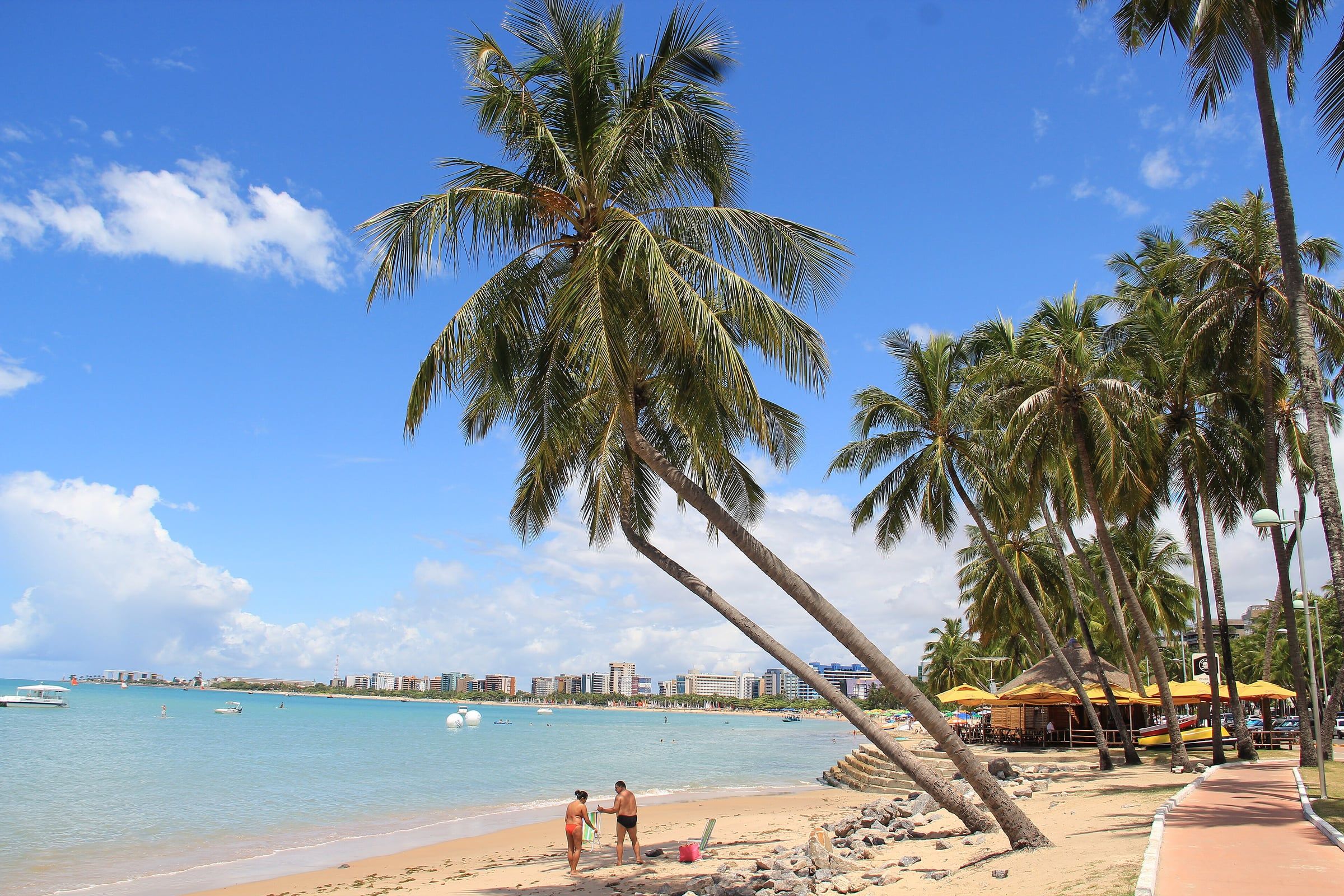 Free access Maceió city waterfront Pajuçara Beach Pajuçara is the most central city beach on Maceió's waterfront and the departure point for jangadas to the natural pools. See details
 -
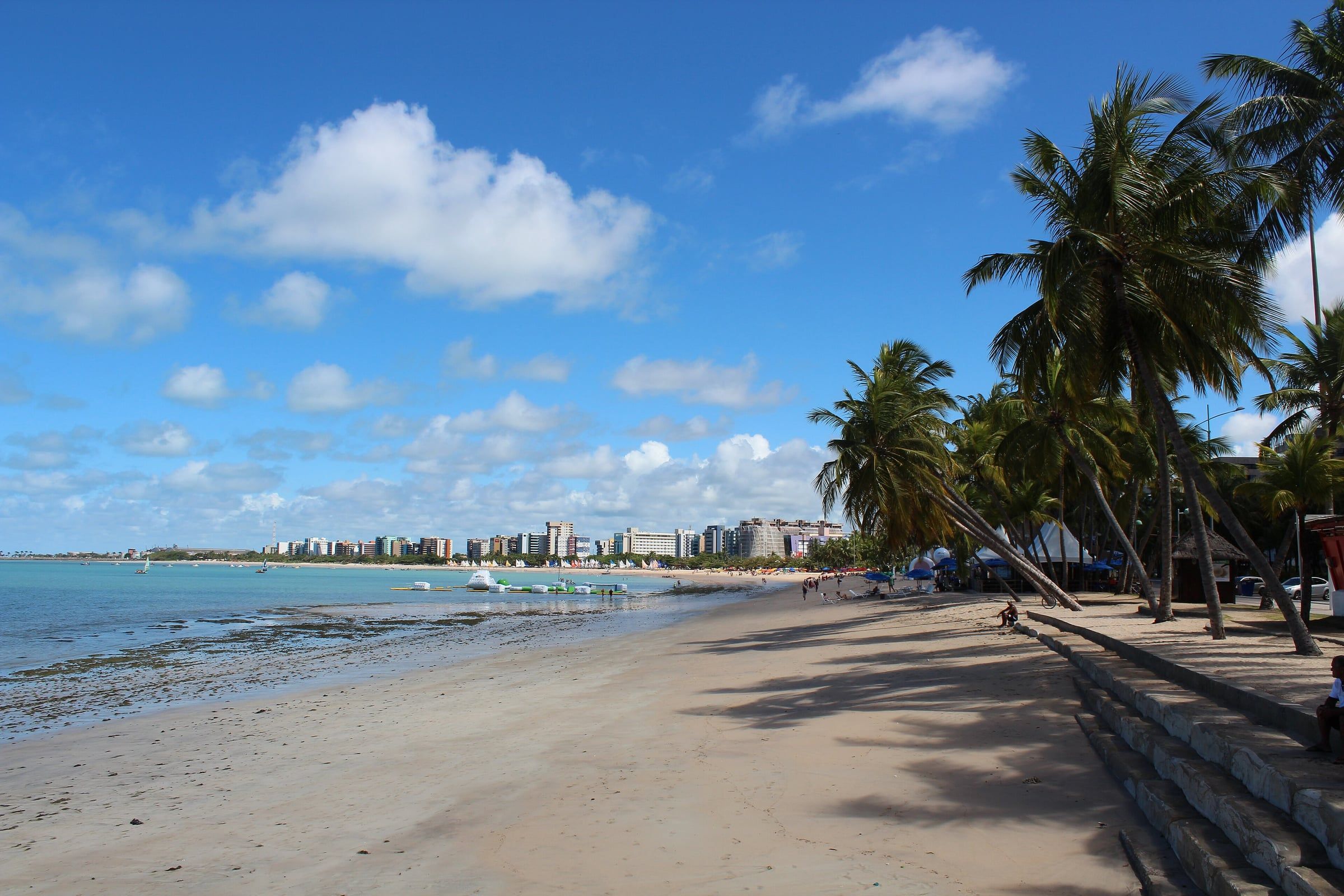 Free access Maceió city waterfront Ponta Verde Beach Ponta Verde is the point of Maceió's city waterfront, marked by the striped lighthouse on the reefs and a sea that becomes shallow at low tide. See details
 -
 Maceió city waterfront Pajuçara Craft Fair On the Pajuçara waterfront, the fair brings together about 200 craft and souvenir stalls, a few steps from the beach. See details
 -
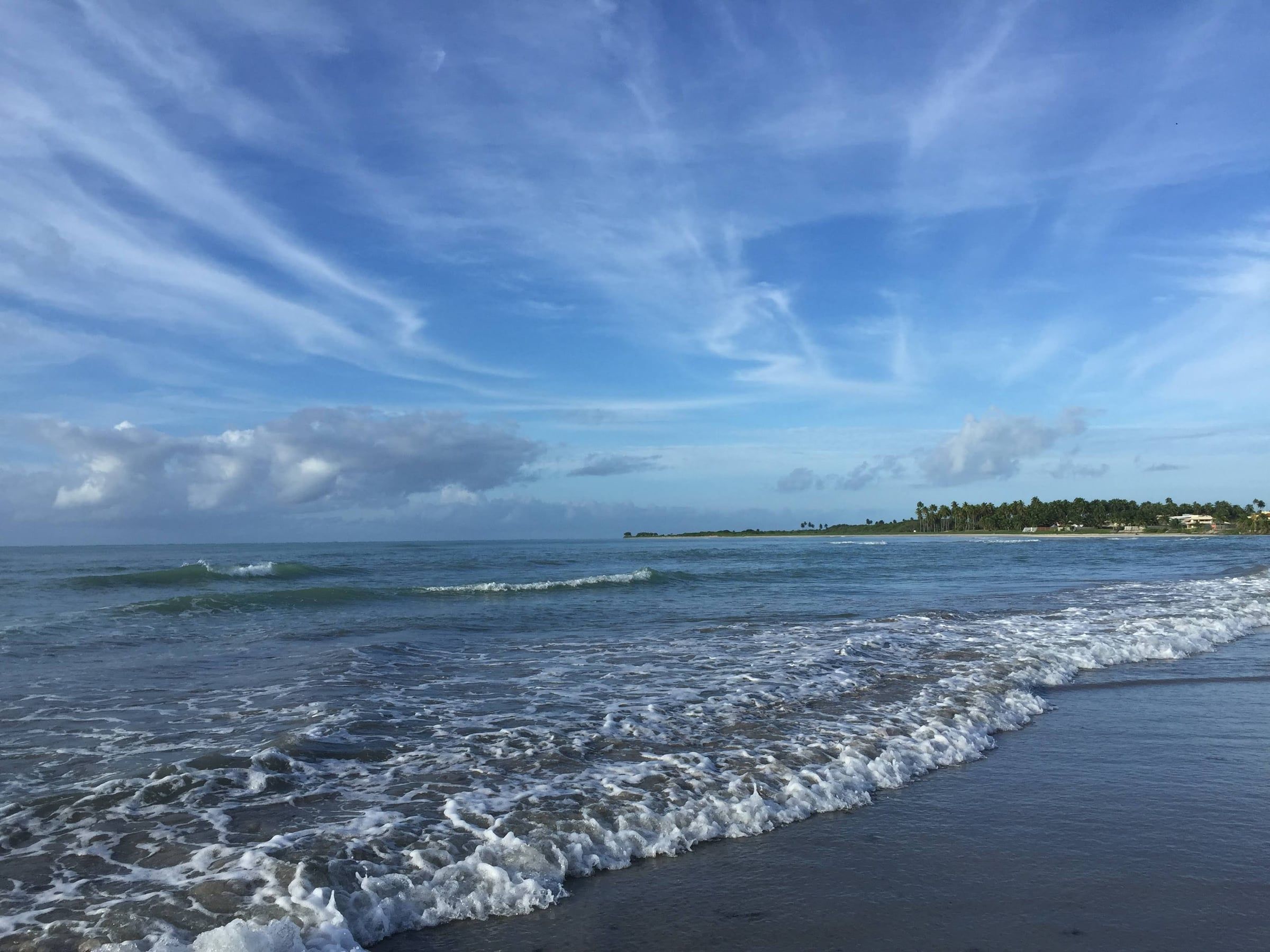 Tide-dependent North coast Paripueira Beach and Natural Pools Paripueira is the municipality just north of Maceió and has natural pools with visits regulated by the Costa dos Corais APA. See details